
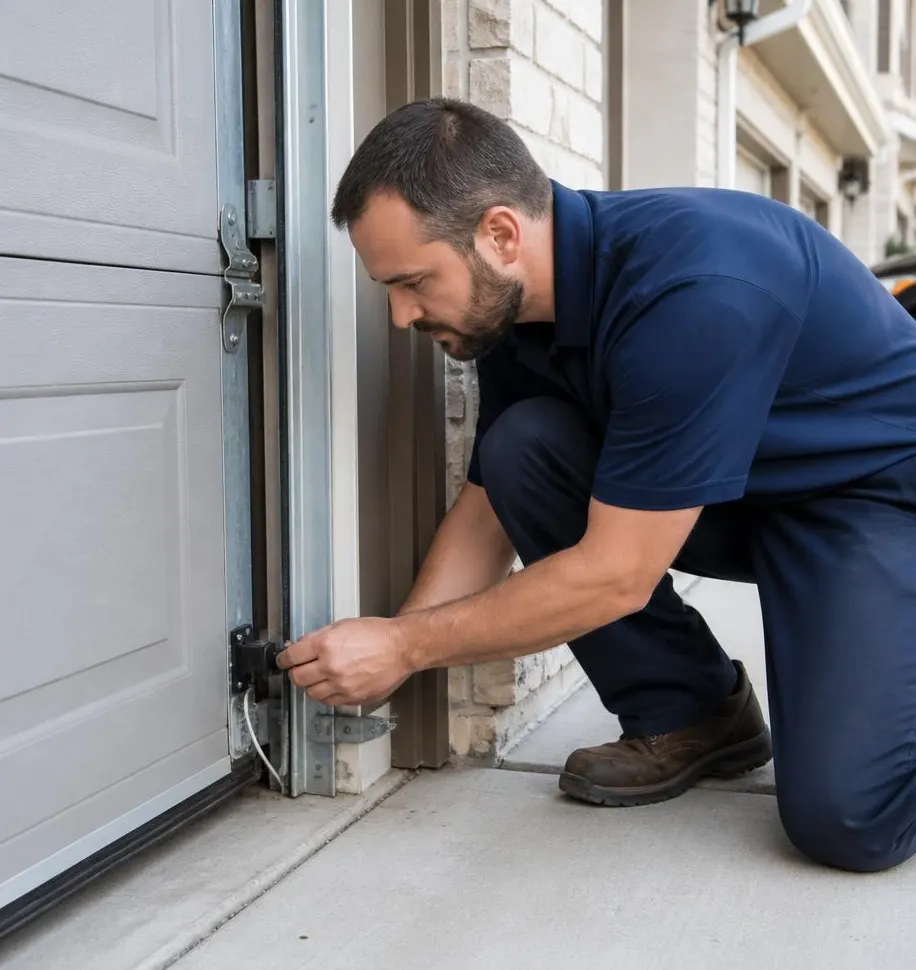
What a Service Call Looks Like After an Attempted Break-In
When we get called out after someone tried to force their way into a garage, the scene is almost always the same. There's a bent or gouged spot near the bottom corner of the door where a flat bar was jammed in. Sometimes the emergency release cord has been pulled through a gap with a wire coat hanger, leaving the opener disengaged and the door swinging free on its tracks. Other times the homeowner says nothing was damaged at all - because the door simply wasn't locked, and someone walked right in. The door itself is rarely the weak point. It's almost always a habit or a piece of overlooked hardware that gave someone an opening.
How Burglars Actually Get Through Garage Doors
Garage doors aren't picked like locks. They're exploited through a handful of known tricks, and once you've seen them explained, they're easy to guard against.
The Coat Hanger / Fishing Trick
Older garage doors, and some newer ones without a protective shield, have a gap at the top where the emergency release cord hangs down inside. Someone slides a wire or a bent coat hanger through the top seal, hooks the cord, and pulls the release. That disconnects the opener from the trailer, and the door can be lifted by hand in seconds - no alarm, no broken glass, nothing that looks forced from the street.
Forcing the Bottom Corner
A pry bar or flat tool wedged under the bottom corner can bend the track just enough to pop the rollers loose, especially on a door that's already a little out of alignment from age or storm wind-load stress. Once one roller is out, the whole panel can be pushed up.
Grabbing the Remote Code
Older openers that use a fixed code instead of a rolling code can have that signal captured with a cheap code-grabbing device and replayed later to open the door. This is less common than physical tricks, but it still shows up, especially on openers that are ten-plus years old and were never upgraded.
Walking in Through an Unlocked Door
The simplest method by far: the garage door was left open a few inches for the dog, or the opener app was left logged in on a phone that got lost, or the side service door into the garage has a cheap knob lock instead of a deadbolt. No damage, no forced entry - just an unlocked path into the house.
Exploiting Storm-Related Wear
In this part of Florida, afternoon downpours, humidity swelling, and hurricane-season wind stress all take a toll on tracks, hinges, and weatherstripping faster than in drier climates. A door that's slightly off-track or has a warped bottom seal from moisture is physically easier to pry than one in good repair. Burglars aren't engineers, but they do go for the door that already looks a little loose.
Habits and Hardware That Actually Stop This
- Add an emergency release shield - a simple plastic or metal cover that blocks access to the release cord from outside. This defeats the coat hanger trick completely and costs very little.
- Upgrade to a rolling-code opener if yours is more than a decade old. Rolling code generates a new signal every time you press the remote, so a captured code can't be replayed.
- Install a slide lock or manual deadbolt on the inside of the door for extra peace of mind when you're away for a long stretch, especially during hurricane season when you might evacuate and leave the house empty.
- Keep tracks and rollers properly aligned. A door that closes flush and tight to the frame leaves no gap to pry. This is as much a maintenance issue as a security one.
- Treat the side service door like a front door. A deadbolt instead of a knob lock, and a solid door instead of one with a thin glass panel, removes an easy second entry point.
- Don't leave the opener logged into a shared or easily lost device, and reset your code if a phone with the garage app is ever lost or a contractor no longer needs access.
- Close the door fully, every time, even for a quick trip to the mailbox. Partial openings are an invitation, not a convenience.
Why This Matters More Here Than in a Lot of Places
Garage doors built or rated for Florida's wind-load requirements are sturdy, but sturdy doesn't mean secure if the track is bent, the seal is swollen from humidity, or the release cord is exposed. Salt air and moisture near the coast speed up rust on hinges and hardware, which loosens the whole assembly over time and makes forcing a corner easier than it should be. A door in good working order is a door that resists prying - which is one more reason routine upkeep matters as much as any lock you add.
When to Call Winter Garden Door & Opener
If your emergency release cord is exposed, your door doesn't sit flush when closed, or you're still running an opener without rolling code, it's worth having it looked at before it becomes an easy target rather than after. We handle Off Track Door Repair for doors that are already loose at the rollers, and Garage Door Opener Installation for homeowners ready to move up to a rolling-code system with better security features. A quick Garage Door Tune-Up & Maintenance visit will also catch rust, misalignment, and worn seals before they turn into an easy opening for someone outside.
If you're searching for a garage door company near Winter Garden, FL, or need a local garage door technician to check your hardware before storm season winds down, give Winter Garden Door & Opener a call. We serve Winter Garden, Ocoee, Windermere, Oakland, Clermont, Gotha, Horizon West, and Apopka, and we're glad to take a look and tell you straight what needs attention.