
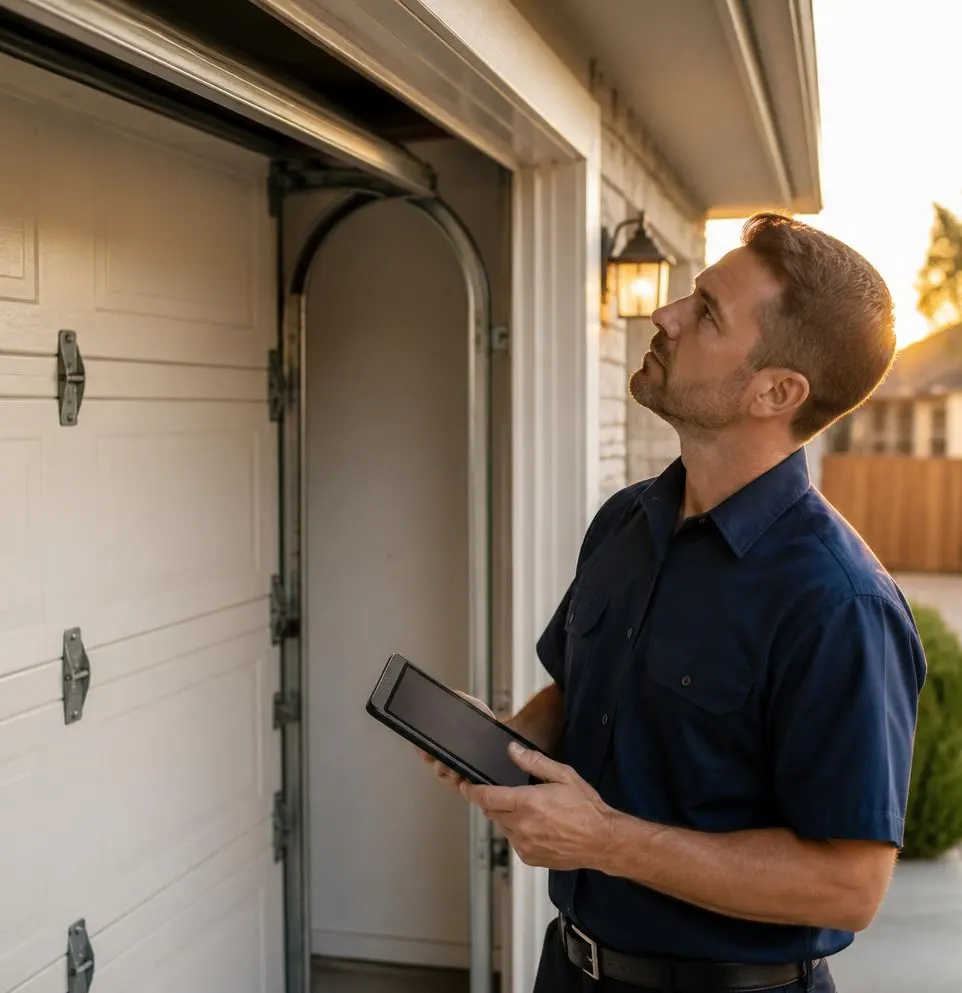
Rule of thumb: only pull the emergency release cord when the garage door is fully down and you need to open it by hand because the opener has quit working. Pull it at almost any other moment — door open, door off track, spring snapped — and you can turn a minor inconvenience into a door that comes crashing down or jumps its tracks entirely.
What the Cord Is Actually For
The red handle hanging from your opener's trolley disconnects the door from the motor. It exists so you can move the door manually during a power outage, when the opener motor burns out, or when you're troubleshooting and need to rule out the opener as the problem. Pull it, and the door is now just a heavy panel on springs and rollers, no longer tied to the drive chain or belt.
That's useful. It's also the reason the cord needs respect. Once disconnected, the only thing holding the door up is spring tension and whatever friction is in the tracks. If those systems aren't in good shape, gravity takes over fast.
What Goes Wrong, and How Badly
Here's where homeowners get hurt or do real damage to the door:
- Pulling it with a broken spring. If a torsion or extension spring has already failed, there's nothing left to counterbalance the door's weight. Disconnect the opener in this state and the door can free-fall. A standard residential garage door weighs well over 100 pounds; it can injure a person or crush whatever's underneath it.
- Pulling it while the door is open. Same problem in reverse — an open door with a failed or weakened spring may slam shut the instant it's disconnected, especially after Florida's humidity has caused wood or composite panels to swell and add extra weight.
- Pulling it on an off-track door. If rollers have jumped the track — which happens more often here after wind-driven rain pushes against the door during a storm — releasing the opener doesn't fix anything. The door can shift sideways, bind, or fall unevenly because one side is still guided and the other isn't.
- Yanking the cord itself. The mechanism is a small lever and spring inside the trolley. Hard, repeated yanking (common when someone's frustrated because the door won't budge) can snap the release lever, leaving the door stuck in manual mode until it's repaired.
When Pulling It Is the Right Move
There are legitimate reasons to use it:
- Power outage with a car trapped inside. If the door is fully closed, the opener has no power, and you need to get a vehicle out, pulling the cord and lifting the door by hand is exactly what it's for — provided the door moves smoothly and evenly when you lift it, a sign the springs are still doing their job.
- Opener motor failure. If the motor hums, grinds, or does nothing at all but the door itself seems fine, disconnecting lets you confirm the door operates normally by hand while you sort out opener repair or replacement.
- Before manually testing door balance. Pulling the cord and lifting the door halfway to see if it stays put (a standard way to check spring tension) is appropriate — but only on a door that's currently closed and shows no signs of a broken spring, like a visible gap in the spring coil or a loud bang you heard earlier.
How to Prevent the Bad Outcomes
- Before pulling the cord, look at the door's position. If it's open, don't disconnect it — call for help or wait until it's closed.
- Check for an obvious broken spring (a gap in the coil above the door) before you ever touch the release. If you see one, leave the opener connected and don't force the door at all.
- If the door feels stuck, stop. Grinding against a bent track or jammed roller won't be solved by the release cord, and forcing it risks bending the track further.
- After reconnecting, run the opener through one full cycle to confirm the trolley has properly re-engaged before loading the door with regular use.
When to Call Winter Garden Door & Opener
If you've pulled the cord and the door won't move smoothly, feels unexpectedly heavy, or you spot a gap in the spring coil, stop and call us before anyone tries to lift it further. That's a job for Garage Door Spring Repair, not manual force. If the door jumped track during one of our afternoon downpours or wind gusts, our Off Track Door Repair service gets the rollers reseated and the door balanced without risking damage to the opener or the panels.
If you're in Winter Garden, Ocoee, Windermere, or anywhere nearby and your garage door isn't behaving the way it should, give Winter Garden Door & Opener a call — we'll come take a look and get it moving safely again.