
The short answer
Grinding usually means metal-on-metal contact from worn rollers or a bad bearing. Squealing almost always means something needs lubrication, most often hinges or rollers that have dried out from Florida heat. Popping points to spring or cable stress, which is a safety issue, not a cosmetic one. Rattling is typically loose hardware working its way free from daily vibration, humidity swelling, or storm winds rattling the panels. The fix depends on which sound you're hearing and where it's coming from, so let's break each one down the way a technician would.
Grinding: check the rollers and track first
Grinding is a mechanical sound, so a tech starts with the parts that physically touch each other. Nylon or steel rollers that have worn down, cracked, or lost their bearings will grind as they drag through the track instead of rolling smoothly. The next check is the track itself, looking for bent sections, debris buildup, or rust pitting from moisture, since humid Florida air speeds up corrosion on uncoated hardware. If the rollers and track are clean and straight, the opener's gear or motor bearing is checked next, since a stripped gear inside the unit produces a similar grinding noise under load.
The fix: Worn rollers are replaced as a set, usually with sealed-bearing steel or nylon rollers that hold up better to moisture. A damaged track section is straightened or replaced. If the noise traces back to the opener's internal gear, that's typically a motor unit repair or replacement rather than a simple adjustment.
Squealing: lubrication comes before replacement
Squealing is friction without enough lubricant, and it's one of the easiest sounds to diagnose. A technician checks the hinges first, since they flex with every cycle and dry out fastest in Florida's heat and humidity swings. Next are the rollers, then the torsion spring coils, which squeal under tension if they're bone dry. If lubrication doesn't quiet things down, the hinge pins or roller bearings themselves may be worn out rather than just dry.
The fix: A silicone-based garage door lubricant applied to hinges, rollers, and springs usually resolves squealing within one cycle. If the noise persists after lubrication, worn hinges or roller bearings need replacing, which is a quick repair on its own but worth bundling into a tune-up.
Popping: treat it as a spring or cable warning
Popping is the sound that should get your attention fastest. A technician checks the torsion springs first, since a popping or cracking sound often means a spring is nearing the end of its cycle life or has already developed a stress fracture. Next is the cable system, checking for fraying or a cable that's slipped off its drum, which can cause a sharp pop as the door shifts unevenly. If springs and cables check out, loose or failing mounting hardware on the spring anchor bracket is the next suspect.
The fix: Springs under tension should only be adjusted or replaced by a trained technician, never DIY, since a failing spring releases a lot of stored energy. Cable repair involves replacing the frayed cable and re-tensioning the system so both sides lift evenly.
Rattling: hardware first, then panels
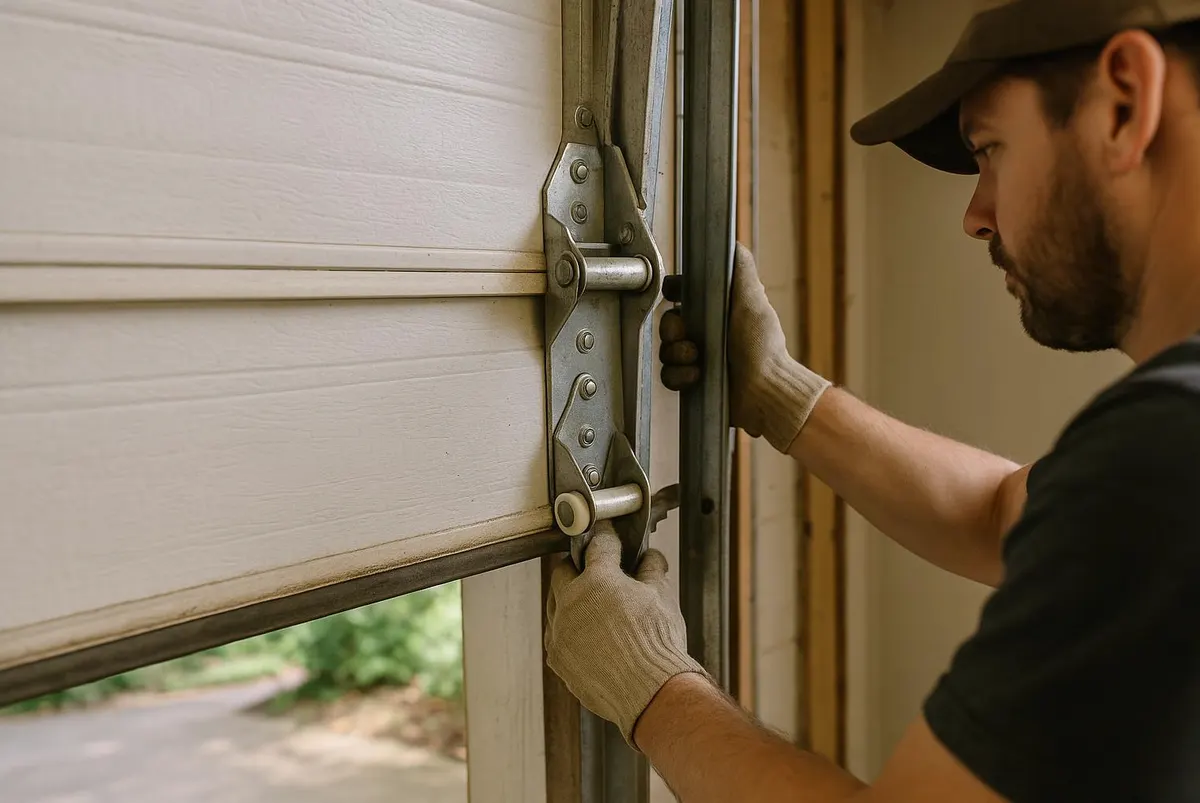
Rattling is usually loose hardware, so the check starts with nuts and bolts on the track brackets and hinges, which work loose over months of vibration and temperature swings between hot days and cooler nights. Next is the opener's connection to the door, since a loose arm bracket rattles with every open and close cycle. If hardware is tight, the panels themselves are checked for warping or loose seams, which is more common after a door has taken on moisture or weathered a few hurricane-season storms.
The fix: Loose hardware gets tightened or replaced during a standard tune-up. Warped or damaged panels may need section replacement, especially if wind-load stress during storm season has started to separate seams.
When to call Winter Garden Door & Opener
If you're hearing popping or grinding, or a squeal that lubrication doesn't fix, it's time to call. We'll run a full diagnostic covering springs, cables, rollers, and track, then recommend a Garage Door Tune-Up & Maintenance visit for wear-and-tear noises or a Garage Door Spring Repair for anything involving tension or cables. We serve Winter Garden, Ocoee, Windermere, Oakland, Clermont, Gotha, Horizon West, and Apopka, and we show up on time to get it right the first time.
Hearing something off? Call Winter Garden Door & Opener today and we'll get your garage door quiet and running safely again.